
Driving for Dollars: How to Find Distressed Homes
Driving for dollars is how investors find distressed, off-market houses from the road. A field guide: what to look for, how to plan a route, and how to find the owner free.
Driving for dollars is a simple field method: you drive a defined area, spot houses showing signs of distress or vacancy, log the address and a photo, then find the owner and reach out before the property ever hits the market. The leads are off-market, so you are not bidding against anyone. Below is how to read the houses, plan a route that misses nothing, find owners free from public records, and decide when an app is actually worth paying for.
What driving for dollars is, and why it still works
Driving for dollars is one of the oldest prospecting strategies in real estate: you physically drive neighborhoods looking for neglected or vacant homes, because a house that looks distressed from the curb often has an owner who is ready to sell (RETipster; BiggerPockets). It works for two reasons. The properties are off-market, so you avoid the competition that drives up price on anything listed. And the data is something a screen cannot give you: the actual condition of a specific house, today, which is exactly the signal that distinguishes a real lead from a name on a list (PropStream).
It pairs naturally with the records-based methods. A house you flag on the road can be cross-checked against the same public records behind absentee owners, pre-foreclosure data, and tax-delinquent lists — the curb tells you the house is distressed, the records tell you who owns it and whether they are behind.
What to look for from the road
The skill is pattern recognition. You are scanning for deferred maintenance and signs nobody is home, because both point to an owner who has checked out.
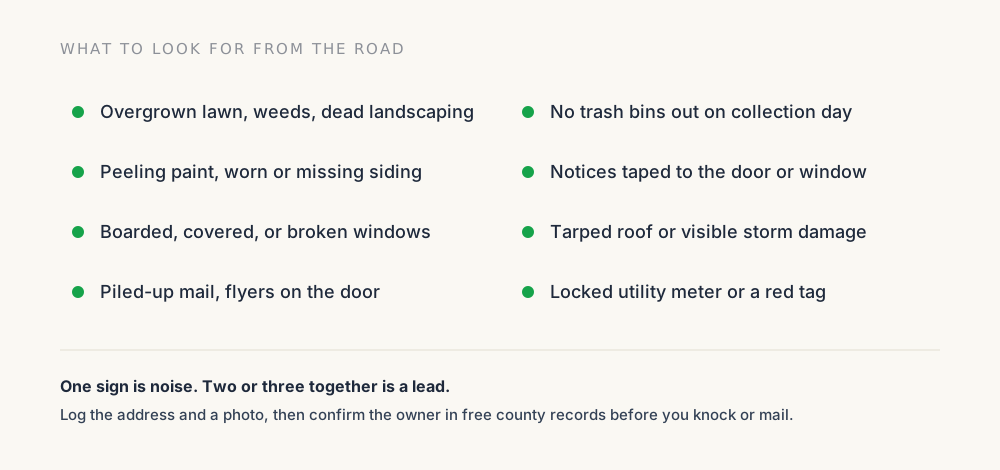
No single sign is conclusive — a tall lawn might just be a busy week. It is the stack that matters: overgrown landscaping plus covered windows plus mail piling up is a vacant or neglected house with a high chance of a motivated owner (Mashvisor). Notices taped to the door and a locked or red-tagged utility meter are stronger still, since they suggest code problems or unpaid bills (Mashvisor). Log the exact address and a quick photo that captures the house number; you will need both to find the owner later.
Plan the route, do not wander
The difference between an afternoon that produces twenty leads and one that produces three is the route. Pick one small farm area and cover every street once, on a repeatable loop, rather than driving wherever traffic takes you.
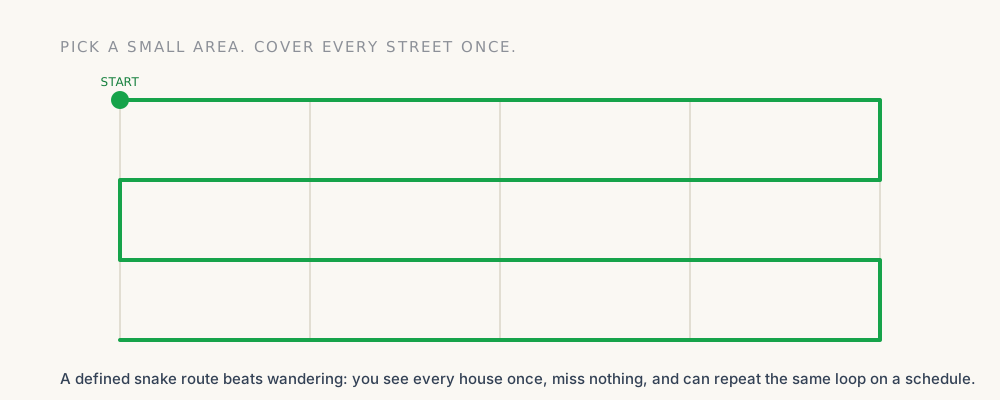
A defined snake route means you see every house exactly once, miss nothing, and can run the same loop again in a month to catch what changed. Start with an area you would actually buy in, keep it small enough to finish, and treat it as a beat you work on a schedule — consistency is what separates investors who get deals from those who quit after one drive (BiggerPockets).
From a house on the road to an offer
Spotting the house is step one of six. The rest is turning an address into a conversation.
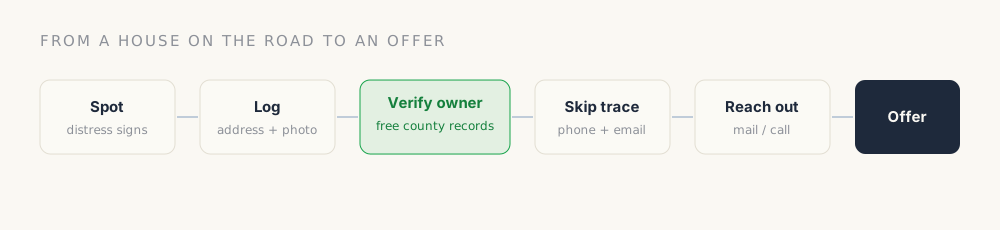
The step most guides rush past is verify the owner, and it is free. Take the address to your county assessor or appraisal-district property search and pull the owner of record and their mailing address — the same public-records cross-check behind every method in our methodology and defined in the learn hub. That tells you whether the owner is absentee, who to address, and where to send mail before you spend a cent on data. Only then do you skip trace for a phone number, reach out by mail or call, and make an offer.
Free versus an app: the honest math
You can drive for dollars with nothing but your phone’s notes app and your county’s free property search. For one person working one area, that is a complete system and it costs zero.
An app earns its fee at the points the manual method strains:
- Capture at speed. Logging addresses and photos while you drive is faster and safer in a purpose-built app than typing notes.
- Built-in owner lookup and skip tracing. Tapping a house to pull the owner and append a phone number removes the manual county step and the separate skip-tracing service, which matters once your list is long.
- Routes, teams, and dedup. Tracking which streets are covered, splitting areas across drivers, and not re-logging the same house is where software clearly beats a notebook.
None of that means buy first. Drive a few routes free, see how many real leads your area produces, and pay for an app when the manual capture-and-lookup loop becomes the bottleneck. When it does, we ranked the options in best driving-for-dollars apps, with pricing verified at each vendor’s own page — and we say plainly which of them pay us nothing. The recommendation is never driven by who pays us.
Respectful, compliant outreach
The owner of that house is a person, and the laws are real:
- Lead with a straightforward offer to buy, not a comment on the property’s condition.
- Mail to a current address. Run your mailing list through USPS NCOALink, the dataset of roughly 160 million permanent change-of-address records that updates lists before you mail (USPS PostalPro: NCOALink).
- Mind the phone rules. If you call or text, follow TCPA and state consent and calling-time rules, and honor a do-not-contact request immediately.
- Knock with judgment. A polite door knock is fine; pushing past a no is not, and it is how the strategy earns a bad name.
Frequently asked questions
What is driving for dollars? Driving for dollars is a real estate prospecting method where you drive a target area, identify distressed or vacant houses by their visible condition, record the addresses, find the owners through public records, and reach out with an offer before the property is listed.
Does driving for dollars still work? Yes. Because the leads are off-market and based on a house’s real, current condition, the strategy still surfaces motivated sellers that screen-based lists miss, and it remains one of the lowest-cost ways to generate leads.
What are the signs of a distressed property? Overgrown landscaping, peeling paint or damaged siding, boarded or covered windows, piled-up mail, no trash bins out on collection day, notices on the door, a tarped roof, and a locked or red-tagged utility meter. One sign is weak; two or three together is a lead.
Do I need an app to drive for dollars? No. You can do it with your phone’s notes app and your county’s free property search. An app speeds up capturing addresses, looking up owners, skip tracing, and tracking routes across a team, which matters mainly once you scale.
How do I find the owner of a house I spotted? Take the address to the county assessor or appraisal-district property search, which is public and free, to get the owner of record and their mailing address. Then skip trace if you need a phone number.
Sources
- RETipster — What is driving for dollars (verified June 2026)
- BiggerPockets — Driving for Dollars (verified June 2026)
- PropStream — What is driving for dollars (verified June 2026)
- Mashvisor — What to look for when driving for dollars (verified June 2026)
- USPS PostalPro — NCOALink (verified June 2026)
This article is structured desk research drawing on public sources and primary records, cited and dated. It is not legal advice. Outreach rules and records access vary by state and county; verify the rules for your jurisdiction.