
Answer Engine Optimization for Real Estate 2026
ChatGPT drives 95.2% of real-estate AI referrals. A grounded guide to real estate entity optimization: semantic triples, structured data schema, and earning AI citations.
Answer Engine Optimization is the work of getting cited inside an AI answer rather than ranked below it. In real estate it matters because ChatGPT already accounts for 95.2% of AI referral traffic in the sector (Conductor, 2025). The honest caveat up front: AI referrals are still only about 1% of all web traffic (Search Engine Land). So this is not “search is dead” — it is a small, concentrated, fast-growing layer worth positioning for now, while it is cheap to win.
Where the traffic is going — and where it is not
The Conductor data is striking: of the sliver of traffic that comes from AI assistants, real estate is the most ChatGPT-dominated category measured, at 95.2% (Marketing Charts). But keep both numbers in view at once.
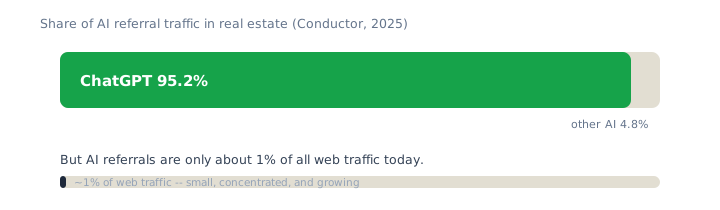
That framing is the whole strategy. Answer Engine Optimization for brokers is a hedge you build while the layer is small, not a reason to abandon the channels that still deliver 99% of visits. Anyone selling it as the death of search is selling hype.
From keywords to entities
Classic SEO rewarded pages that matched a query’s words. Language models do something different: they assemble an answer from entities and the relationships between them. So the unit of optimization shifts from the keyword to the entity — what real estate entity optimization 2026 actually means.
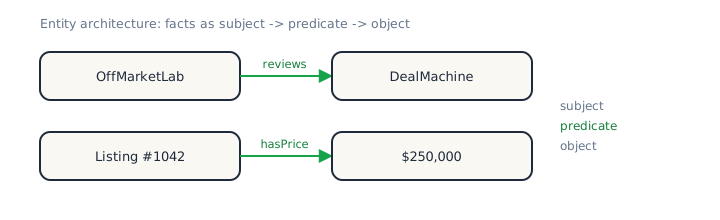
The machine-legible form of a fact is a semantic triple: a subject, a predicate, and an object. “OffMarketLab — reviews — DealMachine.” “Listing #1042 — hasPrice — $250,000.” Stack enough unambiguous triples and you have described your business in the exact shape an engine can reuse.
Structured data is the substrate
You express those triples with structured data: the schema.org vocabulary, written in JSON-LD, which Google explicitly recommends and which AI crawlers parse more easily than older formats (schema.org; implementation guides confirm JSON-LD as the recommended format). The lever that turns a pile of markup into a graph is @id: it lets nodes reference each other — Organization, WebPage, Person, FAQPage — so your site resolves into one coherent knowledge graph instead of disconnected snippets (Momentic).
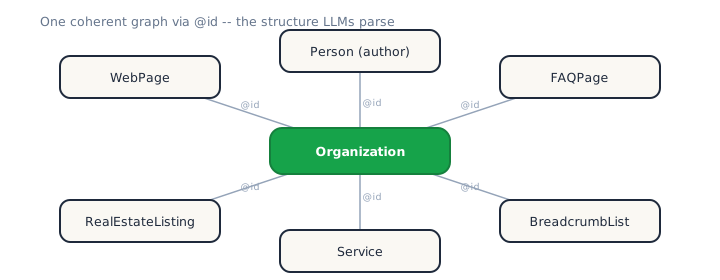
For a brokerage, the workhorse is structured data schema for property listings: the RealEstateListing type wraps a property (a Residence, House, or Apartment) in a listing context with price, availability, and dates (schema.org). Add Organization and Person (agent) markup with sameAs links to real profiles, and FAQPage for the questions buyers actually ask. One 2026 analysis reports that pages with valid structured data are markedly more likely to surface in AI Overviews than pages without it (GW Content) — treat that as directional, not gospel, but the direction is clear.
What actually earns a citation
Structured data makes you parseable. Citations are earned by being worth citing. In practice, ChatGPT real estate broker citations go to sources an engine can attribute specific, verifiable facts to:
- Dated, specific facts over vague marketing prose (“median days on market in 77002 was X in June 2026,” not “homes sell fast here”).
- Original data or analysis the model cannot get from ten identical competitors.
- Clean entity signals — consistent name/address,
@id-linked schema,sameAsto authoritative profiles, a real named author. - Direct-answer formatting — a 40-80 word answer near the top, plus an
FAQPageblock, so the exact sentence an assistant needs is easy to lift.
None of this guarantees a citation. What it does is remove ambiguity, so that when an assistant answers a high-intent real-estate question, your entity is the cleanest source in reach.
The honest position
We practice this on this site — Organization, WebSite, and FAQPage schema, dated citations, a named author — because it is cheap insurance, not because search is over. Do both: keep classic SEO, which still moves the 99%, and build the entity layer for the 1% that is compounding. Our whole methodology is the same idea applied to facts: make every claim verifiable at its source. That is what earns trust from a reader and a language model alike.
Sources
- Marketing Charts — ChatGPT referral traffic by industry (Conductor) (95.2% real estate; accessed July 2026)
- Search Engine Land — AI is ~1% of traffic, mostly ChatGPT (AI-traffic share caveat; accessed July 2026)
- schema.org — RealEstateListing (listing schema type; accessed July 2026)
- Momentic — using @id for SEO, LLMs & knowledge graphs (@id and entity graphs; accessed July 2026)
- GW Content — structured data for SEO in 2026 (structured data and AI Overviews; accessed July 2026)