
Pre-Foreclosure: What It Is and How It Works
Pre-foreclosure is the window after a homeowner defaults but before the auction. What triggers it, the 120-day rule, and why investors target the window.
What pre-foreclosure means
Pre-foreclosure is the stretch of time after a homeowner defaults on the mortgage but before the lender completes a foreclosure sale. The default is already on the public record, yet the owner still holds title and still has room to act. That gap — distressed, but not yet sold — is what makes it valuable to investors.
The Consumer Financial Protection Bureau sets the federal floor: “the legal foreclosure process can’t start until you are at least 120 days behind on your mortgage” (accessed July 2026). Those 120 days, plus state waiting periods, are the pre-foreclosure window.
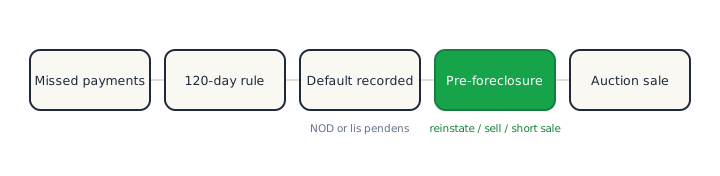
How a home enters pre-foreclosure
Missed payments lead to default, and the default gets recorded in one of two forms depending on the state:
- A notice of default in non-judicial, power-of-sale states.
- A lis pendens in judicial states, where the lender must sue to foreclose.
Both are public and dated. Both mark the start of the pre-foreclosure window.
The window (and the owner’s options)
The 120-day rule is not just a delay; it exists so borrowers can seek “loss mitigation” — the options a servicer must offer to help keep the home (CFPB, accessed July 2026). During pre-foreclosure an owner can typically reinstate the loan, pursue a modification or repayment plan, or sell the property to clear the debt before it goes to auction.
That last option is where an investor and a motivated owner can meet: a sale before the auction can beat a foreclosure on the owner’s credit while giving the investor a deal.
Why investors watch it — and how to find it
Pre-foreclosure is a public, dated distress signal, not a rumor. The recording date on the notice of default or lis pendens is the true age of the lead — a vendor’s “updated daily” badge means nothing if the underlying filing is weeks old. Verifying the record against its primary source is the core of our methodology.
You can pull these records free, county by county; the step-by-step is in where pre-foreclosure data comes from. When that stops scaling, paid tools aggregate the same public filings — our DealMachine review walks through one option, and is honest about when the free route is enough.
Sources
- Consumer Financial Protection Bureau — foreclosure timeline (120-day rule, loss mitigation; accessed July 2026)
- California Civil Code section 2924 (FindLaw) (state waiting period example; accessed July 2026)
Frequently asked questions
- What does pre-foreclosure mean?
- Pre-foreclosure is the stage after a borrower has defaulted on the mortgage but before the lender completes a foreclosure sale. The default is on the public record (a notice of default or a lis pendens), but the owner still holds the property and still has options.
- How long does pre-foreclosure last?
- It varies by state and situation. Federally, foreclosure generally cannot begin until the borrower is at least 120 days delinquent, and state waiting periods add more time. In California, for example, at least three months must pass after the notice of default before a sale notice. Pre-foreclosure often runs a few months, sometimes longer.
- Can you buy a house in pre-foreclosure?
- Yes. Because the owner still holds title, you can approach them directly and negotiate a sale before the auction -- often the whole point for investors. You can also buy at the foreclosure auction itself, but that is a different, riskier process.
- Is pre-foreclosure the same as foreclosure?
- No. Pre-foreclosure is the window before the property is sold; foreclosure is the process that ends in the sale. During pre-foreclosure the owner can still reinstate the loan, pursue loss mitigation, or sell the home.
- How do I find pre-foreclosure properties?
- The underlying records -- notices of default and lis pendens filings -- are public at the county recorder or clerk. You can search them free, or use a paid tool that aggregates them across counties. Either way, the recording date tells you how fresh the lead really is.
How this page was researched and verified: read the methodology. Found something out of date? Tell us.
Get the REI software pricing tracker
A dated log of what these tools actually cost, updated as prices change. No spam, unsubscribe anytime.
Double opt-in. We never sell the list. See our privacy policy.