
How to Find Cash Buyers for Wholesaling (Free Method)
How to find cash buyers for wholesaling free from county deed records: the step-by-step method, how to verify a buyer is real, and honest free-vs-paid math.
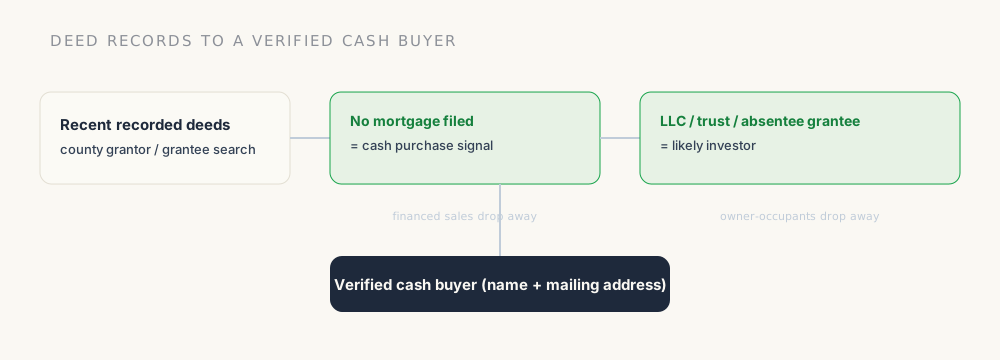
You find cash buyers for wholesaling free in your county’s public deed records. Every closed sale is recorded, and a purchase with no mortgage filed alongside it is a cash buyer. Pull recent deeds, filter for those with no loan, flag the LLC, trust, and absentee-owner buyers, and you have a list of real, verified investors who actually pay cash — no subscription, no skip tracing, no list to buy.
That is the method most guides will not teach you straight, because the sites that rank for this term sell the tool they want you to use instead. Below is the full free workflow on a real county, how to tell a real cash buyer from a tire-kicker, and the honest math on when a paid tool is actually worth it.
What a cash buyer actually is
A cash buyer is someone who purchases real estate without financing — no mortgage, no bank loan recorded against the property. For a wholesaler, cash buyers are the people you assign your contracts to: investors who can close fast because they are not waiting on a lender. They are usually fix-and-flippers, buy-and-hold landlords, or small acquisition LLCs, and the best of them buy repeatedly.
The defining trait you can verify is the absence of a loan. When a property is bought with a mortgage, the lender records a deed of trust (or mortgage) at the same time as the deed. When it is bought with cash, there is a deed and no accompanying loan instrument. That single fact — deed filed, no mortgage — is the public-record fingerprint of a cash purchase, and it is the backbone of the free method below.
Why cash buyers matter for wholesalers
A wholesale deal has two halves: getting a property under contract, and finding someone to assign it to. The second half fails more often than beginners expect. A signed contract with no buyer is a liability with a clock on it. Your buyers list is the asset that makes everything else worth doing.
Cash buyers also make up a meaningful and growing share of the market. All-cash purchases hit an all-time high of 26% of home buyers in the National Association of Realtors’ 2025 Profile of Home Buyers and Sellers (NAR, 2025, verified June 2026). Roughly one in four closings is a cash deal, and every one of those buyers is recorded by name in public records. You do not need to guess who the cash buyers in your market are. You can look them up.
The free public-records method, step by step
This is the part the tool blogs compress into one sentence before pivoting to their product. It is the whole article here.
First, the legitimacy question, because beginners always ask it: yes, this is allowed. County clerk deed records are public by statute. In Texas, for example, Local Government Code Section 191.006 states that county clerk records not otherwise restricted “shall be open to the public at all reasonable times” and that “a member of the public may make a copy of any of the records” (Tex. Local Gov’t Code 191.006, verified June 2026). You are reading documents the law requires the county to show you. No gray area.
We will use Harris County, Texas — the largest market we track — for the click-path. Other counties differ in interface but not in the underlying records.
1. Open the county’s real property search. The Harris County Clerk runs a public real property records search where anyone can search recorded documents by grantor or grantee name, file number, or legal description (Harris County Clerk: real property search, verified June 2026). “Grantor” is the seller; “grantee” is the buyer. For your buyers list, the grantee is who you want.
2. Pull recent deeds. Search by document type for warranty deeds and special warranty deeds within a recent date range — the last 6 to 12 months keeps the list of active buyers. Each result is a property that changed hands.
3. Filter for cash purchases. This is the key move. For each deed, check whether a deed of trust (the Texas loan instrument) was recorded against the same property around the same date. No deed of trust means no recorded mortgage, which means a cash purchase. The grantee on those no-loan deeds is your cash buyer.
4. Flag the investors. Not every cash buyer wants more deals — some are owner-occupants who paid cash for their own home. The ones who want your deals show two tells: the grantee is an entity (an LLC or a trust), and/or the buyer’s mailing address is different from the property address (an absentee owner who does not live there). An LLC buying a non-owner-occupied house with cash is almost always an investor. This is the same absentee-owner cross-reference covered in our guide to finding absentee owners.
5. Find the repeat buyers. Take the entity names you flagged and search them as the grantee again. A name that appears on three, five, ten cash deeds is a serious, active buyer — exactly who you want at the top of your list. Their mailing address of record is your contact point.
The Harris County Clerk lets you view documents filed after January 2000 free as watermarked copies once you create a free account, with non-certified copies priced per page (Harris County Clerk: public records, verified June 2026). For building a buyers list, the free watermarked view is all you need — you are reading names and addresses, not filing anything.
Cross-referencing and qualifying your buyers
A name from a deed is a lead, not yet a usable buyer. Cross-reference and qualify before you rely on anyone.
Cross-reference to the appraisal district. Take each investor entity and look it up in the county appraisal district records to see the full portfolio under that name — how many properties, what types, which neighborhoods. A buyer with twelve single-family houses across three ZIP codes has just told you their buy box without you asking. This is the same public-records cross-check our methodology is built on.
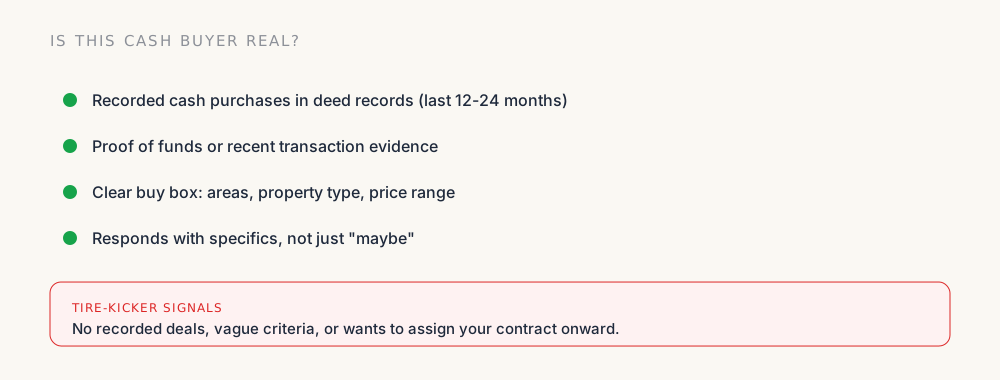
Verify the buyer is real — the part the tool blogs skip. Anyone can say they are a cash buyer. The deed record is your lie detector. A genuine cash buyer has recorded cash purchases you can see in the grantee index; a tire-kicker has none. Before you trust someone with a deal:
- Check their transaction history in the deeds. Recent recorded cash purchases under their name or entity are the strongest proof there is. It is verification you do for free, before any conversation.
- Ask for proof of funds. A real buyer produces a bank statement or letter without drama. Hesitation here is a signal.
- Pin down the buy box. Areas, property types, price range, condition. A real buyer answers in specifics; a tire-kicker stays vague.
- Watch for the assign-it-onward tell. If a “buyer” wants to assign your contract to their own buyer, they are another wholesaler, not an end buyer. Nothing wrong with that as a backup, but know what you have.
The signal that should slow you down: someone who calls themselves a cash buyer but has no recorded deals, no clear criteria, and no proof of funds. The deed records would have shown the deals if they existed.
Respectful, compliant outreach
Once you have verified investors and their mailing addresses of record, reaching out is straightforward and low-risk — you are contacting businesses about doing business.
- Mail or email beats cold-calling here. You have a mailing address from the record. A short note saying you source off-market deals in their target area and asking what they are buying is welcome from a real wholesaler with real inventory.
- If you call, follow the rules. Phone outreach is governed by the Telephone Consumer Protection Act and state calling-time and consent rules (47 U.S.C. 227, verified June 2026); honor a do-not-contact request on the first ask. Investors are a softer audience than distressed sellers, but the rules still apply.
- Lead with the deal, not the pitch. Active buyers want deal flow. The fastest way onto someone’s preferred-wholesaler list is to bring a real, well-analyzed deal, not a generic introduction.
The buyers found this way are pre-qualified by definition: the public record already proved they close with cash. That is worth more than a thousand names scraped from a Facebook group.
Paid tools versus free: the honest math
Here is what no vendor blog will tell you cleanly, because they sell the tool: the free method is the right answer for most wholesalers most of the time. The data inside any paid cash-buyers list is this same public record, aggregated and re-sold.
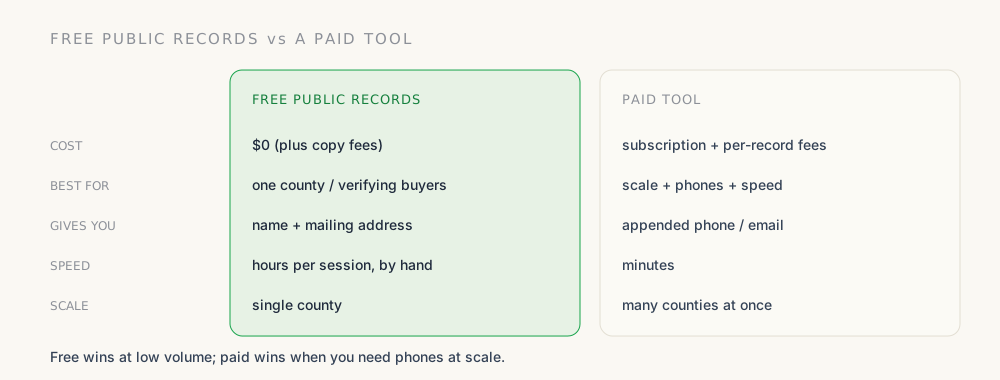
The free public-records method wins when you:
- Work a single county or metro.
- Are learning, and want to see who the real buyers actually are.
- Want verified, proven buyers over raw volume.
- Have a few hours a week and no budget.
A paid tool earns its fee only at the points the free method breaks:
- Phone numbers at volume. The deed gives you a name and a mailing address, not a cell number. Appending phones is skip tracing, priced per record, and it does not scale by hand. If your outreach is cold-calling, this is the real reason to pay — and it is covered in our skip tracing guide.
- National or multi-county scale. Pulling and normalizing deed records across dozens of counties is a part-time job. Aggregation is what these platforms sell.
- Speed. Software returns in minutes what takes hours by hand. If you value your hour at more than the tool costs to save it, the math flips.
Run the actual numbers before subscribing. Estimate how many qualified cash buyers one county yields in a session, value the hours it takes to pull them, and compare that to a monthly fee plus per-record skip-trace costs. For one county and a learning wholesaler, free wins clearly. When you need phone numbers at volume or you work many markets at once, paying usually does. We keep tool-by-tool breakdowns neutral on the compare page — there is no list to sell you here.
Frequently asked questions
How do I find cash buyers for wholesaling? Search your county clerk’s public deed records for recent sales (grantee = buyer), filter for purchases with no mortgage or deed of trust recorded alongside the deed (the cash-purchase signal), then flag the LLC, trust, and absentee-owner buyers as investors. Those are your cash buyers, found free (Harris County Clerk: real property search, verified June 2026).
Can I find cash buyers from public records for free? Yes. Deed records are public by statute — in Texas, county clerk records “shall be open to the public” and you may copy them (Tex. Local Gov’t Code 191.006, verified June 2026). Many counties, including Harris County, let you view post-2000 documents free as watermarked copies with a free account (Harris County Clerk, verified June 2026).
How many cash buyers do I need on my list? Fewer than the listicles imply. A handful of genuinely active, verified repeat buyers who match common deal types will move more contracts than hundreds of unqualified names. Quality of verification beats raw count.
How do you verify a cash buyer is legitimate? Check the deed records for recorded cash purchases under their name or entity, ask for proof of funds, and pin down a specific buy box. A real buyer has a paper trail and clear criteria; a tire-kicker has neither. The public record verifies them before you ever talk.
Do I need a paid tool to find cash buyers? No, not for a single county. Paid tools are worth it only when you need phone numbers appended at volume (skip tracing) or you work many counties and cannot pull and cross-reference records by hand. For low volume and learning, the free public-records method wins.
Sources
- NAR — Top 10 Takeaways from the 2025 Profile of Home Buyers and Sellers — all-cash buyers at an all-time high of 26% (verified June 2026)
- Texas Local Government Code Section 191.006 — county clerk records open to the public; public may copy records (verified June 2026)
- 47 U.S.C. 227 — Restrictions on use of telephone equipment (Cornell LII) — TCPA calling and consent rules (verified June 2026)
- Harris County Clerk — Real Property Search — public search by grantor/grantee name, file number, legal description (verified June 2026)
- Harris County Clerk — Public Records — free watermarked viewing of post-2000 documents with a free account; per-page copy fees (verified June 2026)
This article is structured desk research: public records, state statutes, and primary government sources, cited and dated. It is not legal advice. Records access, document types, fees, and outreach rules vary by state and county; verify the rules and the cash-purchase indicators for your jurisdiction.